Bhatia Seeds

Wheat portfolio

Five wheats,
one Balwan™ series.

Each one answers a different problem on the farm — getting off the field early, carrying heat through grain fill, pulling a heavy crop of bhusa, or simply making the best chapati in the village. Produced on our own land in the Terai, cleaned and graded here, and sold under our own name.

5Wheat varieties
800Acres of our own production
19TPH processing
1969Producing seed since

What do you need from the crop?

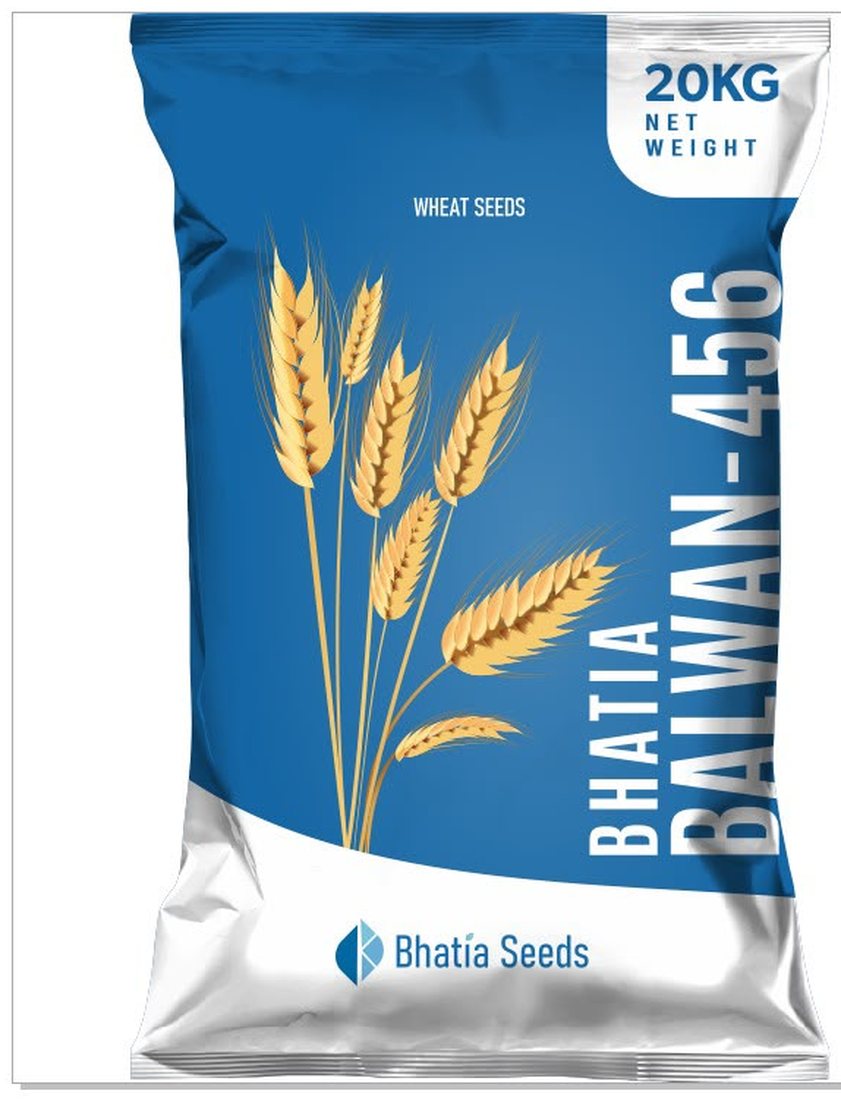
A 20 kg bag of Bhatia Balwan-456 wheat seed

Bhatia Balwan™-456

Off the field in 120 days, and it holds its yield through the heat.

Duration
120 days
Height
Short · 85–95 cm
Grain
Bold
Yieldquintals per hectare
68 average87.1 potential
0.96Heat tolerance index
  • Short, 85–95 cm, and it does not lodge
  • 120 days — off the field before the others
  • Bold grain, better chapati-making quality
  • Good tillering
  • Better stress tolerance
  • Heat tolerant, heat tolerance index 0.96
  • Resistant to rusts, smut and bunt
  • Sow any time from 1 November to 10 January
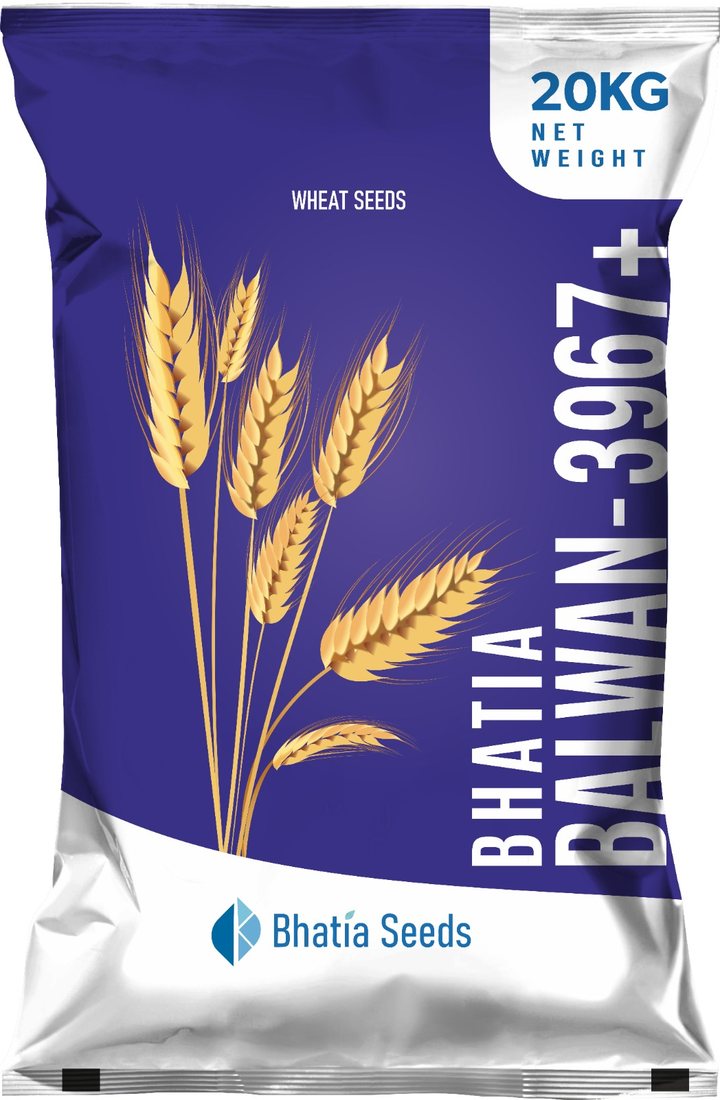
A 20 kg bag of Bhatia Balwan-3967+ wheat seed

Bhatia Balwan™-3967+

Up to 20% more yield than 2967, on a bolder grain.

Duration
130 days
Height
Short · 85–95 cm
Grain
Bold — bolder than 2967
Yieldquintals per hectare
65 average76.2 potential
20%more yield than 2967
  • Up to 20% more yield than 2967
  • Bolder grain than 2967
  • 130 days to maturity
  • Extreme tillering, and good for hay
  • Strong stem — it does not lodge
  • Short, 85–95 cm, heat tolerant
  • Resistant to rusts, smut and bunt
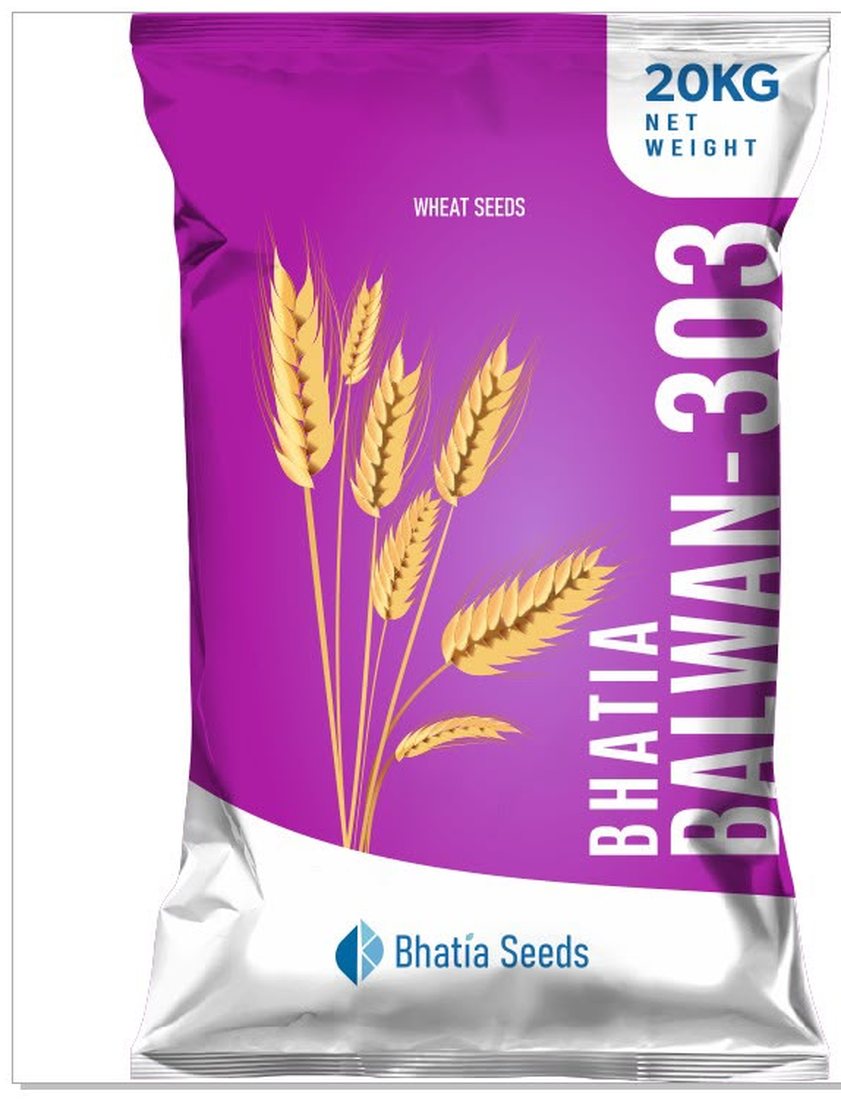
A 20 kg bag of Bhatia Balwan-303 wheat seed

Bhatia Balwan™-303

Hard, lustrous grain that takes both a timely and a late sowing.

Duration
125 days
Height
Short · 85–95 cm
Grain
Hard, lustrous, bold
Yieldquintals per hectare
61 average70 potential
  • Hard, lustrous, bold grain
  • 125 days to maturity
  • Takes both a timely and a late sowing
  • Short, 85–95 cm, and it does not lodge
  • Resistant to rusts, smut and bunt
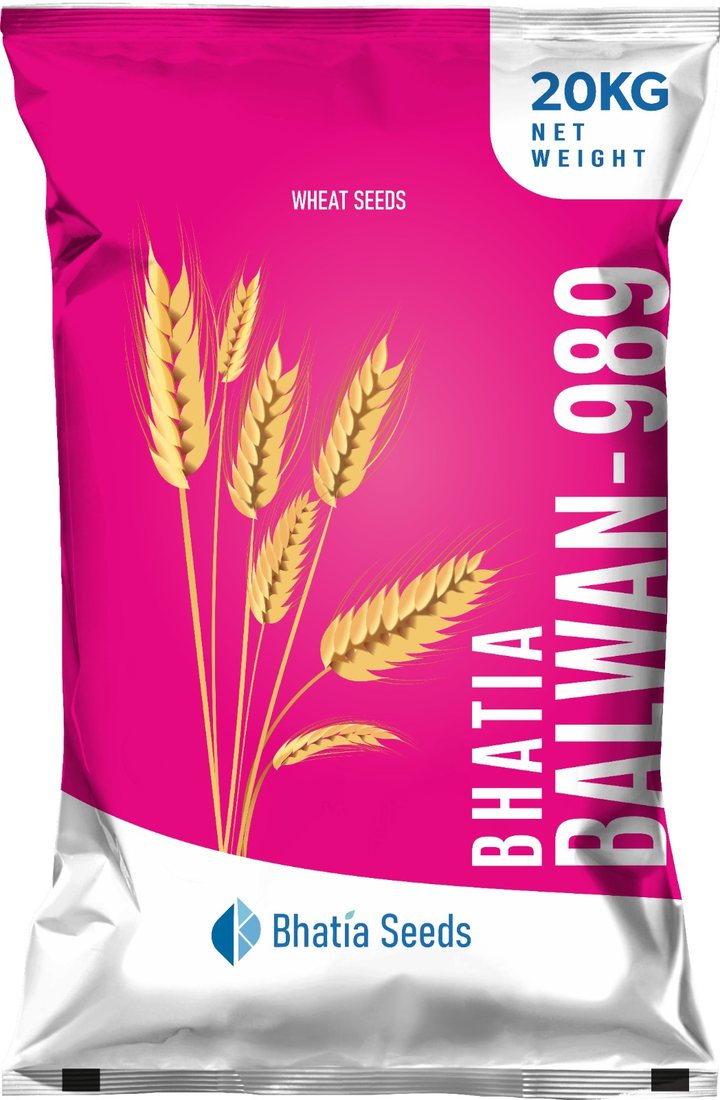
A 20 kg bag of Bhatia Balwan-989 wheat seed

Bhatia Balwan™-989

The best chapati in the series, and the steadiest yield.

Duration
130 days · medium
Height
Medium · 95–105 cm
Grain
Bold
Yieldquintals per hectare
65.3 average74.8 potential
  • Bold grain, best chapati quality in the series
  • 130 days — medium duration
  • Profuse tillering, better for bhusa
  • Better yield stability
  • Medium, 95–105 cm
  • Resistant to rusts, smut and bunt
  • Sow 1 November to 15 December
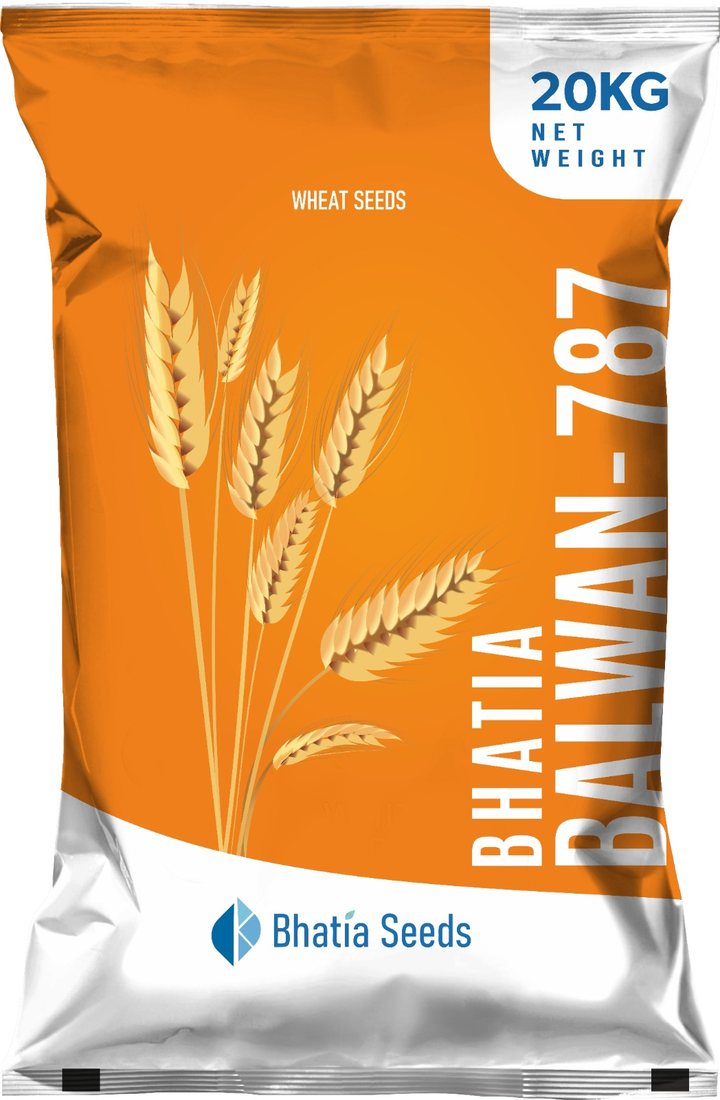
A 20 kg bag of Bhatia Balwan-787 wheat seed

Bhatia Balwan™-787

Covers the ground, smothers the weeds, and keeps the rust off.

Duration
135 days
Height
Medium · 95–105 cm
Grain
Long, bold
Yieldquintals per hectare
67.6 average78 potential
  • Long, bold grain
  • 135 days to maturity
  • Extreme tillering, and good for fodder
  • Better canopy cover and excellent weed competency
  • Extreme yield potential under optimal conditions
  • Medium, 95–105 cm, heat tolerant, and it does not lodge
  • Resistant to rusts, smut and bunt — better rust resistance
  • Sow 1 November to 10 December

Yield

What the series gives

Potential is what the variety has returned in a good year under good management. The average is what it gives across ordinary seasons — the honest number, and the one to plan on.

Average yield Yield potential
Balwan-4566887.1
Balwan-78767.678
Balwan-3967+6576.2
Balwan-98965.374.8
Balwan-3036170
0306090

Quintals per hectare. The same figures are in the table below.

Side by side

All five, on one screen

 Balwan-456Balwan-3967+Balwan-303Balwan-989Balwan-787
Yield potential87.1 q/ha76.2 q/ha70 q/ha74.8 q/ha78 q/ha
Average yield68 q/ha65 q/ha61 q/ha65.3 q/ha67.6 q/ha
Duration120 days130 days125 days130 days · medium135 days
Plant heightShort · 85–95 cmShort · 85–95 cmShort · 85–95 cmMedium · 95–105 cmMedium · 95–105 cm
GrainBoldBold — bolder than 2967Hard, lustrous, boldBoldLong, bold
TilleringGoodExtreme—ProfuseExtreme
LodgingNon-lodgingNon-lodging — strong stemNon-lodgingCan lodgeNon-lodging
DiseaseResistant to rusts, smut and buntResistant to rusts, smut and buntResistant to rusts, smut and buntResistant to rusts, smut and buntResistant to rusts, smut and bunt — better rust resistance
HeatHeat tolerant · HTI 0.96Heat tolerant——Heat tolerant
ChapatiBetter chapati quality——Best in the series—
Fodder / bhusa—Good for hay—Better for bhusaGood for fodder
Sowing window1 November – 10 January—Suits both early and late sowing1 November – 15 December1 November – 10 December

Package of practices

One season,
start to finish

The standard package for a timely-sown irrigated crop in the Terai. Days are counted from sowing — shift them with your own sowing date, and take the local recommendation over anything written here.

  • Before sowing

    Field & seed

    Two or three ploughings to a fine, level tilth — wheat does not forgive a cloddy seedbed. Treat the seed before it goes in; our YieldMax treatment goes on at this stage and is where the 15–20% comes from.

    • Fine tilth, well levelled
    • Seed treatment at sowing
    • Basal dose with the drill
  • Day 0

    Sowing

    Forty kilos an acre of untreated seed, or 35 with YieldMax already on it. Sow with a drill at about 5 cm — deeper and the crown roots sit wrong. Keep rows close enough that the canopy closes before the weeds get going.

    • 35 kg/acre treated · 40 kg/acre untreated
    • 5 cm depth, drilled
    • Rows 20–22.5 cm apart
  • 20–25 days

    Crown root initiation

    The single most important irrigation of the season. Miss this one and nothing you do later gets the tillers back.

    • First irrigation — do not miss it
    • First top dressing of nitrogen
  • 30–35 days

    Weed control

    The window for Phalaris minor and the broadleaf weeds closes fast. Spray on a still morning with enough water to wet the weed, and ask the field team or your KVK which product is working in your block this season.

    • Post-emergence spray
    • Ask locally — resistance shifts year to year
  • 40–45 days

    Tillering

    Second irrigation. The tillers you carry now are the ears you cut in March — which is why the profuse-tillering varieties pull ahead here.

    • Second irrigation
    • Balance nitrogen
  • 60–65 days

    Jointing

    The crop stands up and the stem elongates. Keep it watered; a check here shortens the ear before it has formed.

    • Third irrigation
  • 80–85 days

    Flowering

    Walk the field for yellow and brown rust from late January. Catch it on the lower leaves and it is a small job; let it reach the flag leaf and it is not.

    • Fourth irrigation
    • Scout for rust from late January
  • 100–105 days

    Milk

    Grain filling. This is where heat does its damage, and where a heat-tolerant variety earns its price.

    • Fifth irrigation
    • Watch for an early March
  • 115–120 days

    Dough

    A light last irrigation only if the soil is dry. Too much water now and a March storm puts the crop down.

    • Last irrigation, only if needed
  • 130–135 days

    Harvest

    Cut when the grain is hard and the straw has gone. Combine at about 20% moisture, then dry down to 12% before it goes into the store.

    • Harvest at ~20% moisture
    • Store at 12%

Asked on the farm

The questions that come up

What yield should I expect?

The potential is what the variety has given in a good year under good management; the average is what it actually returns across ordinary seasons. Balwan-456 is the highest of the three we have published at 87.1 q/ha potential and 68 q/ha average. What your own field gives depends on sowing date, water and management far more than on the variety alone.

How much seed per acre?

Forty kilos an acre for untreated seed. Treated seed needs less — 35 kg an acre with YieldMax on it, because a treated seed establishes more reliably and you are not sowing extra to cover the ones that fail. That is five kilos an acre back in your pocket before the crop has even come up. Push the rate up for a late sowing or a rough seedbed.

Timely or late sowing?

Every day after the third week of November costs yield. If you are going to be late, choose for it rather than against it — Balwan-303 takes a late sowing and Balwan-989 runs to the middle of December.

Which one if the water is short?

Balwan-456. At 120 days it finishes before the worst of the heat, and a heat tolerance index of 0.96 means it holds its yield when the season turns — which is how it averages 68 q/ha against a potential of 87.1.

Which one if I need the bhusa?

Balwan-787 and Balwan-3967+ both tiller heavily and cut well for fodder; Balwan-989 is the one if you want the bhusa without giving up the chapati.

What the heat tolerance index means

It compares what a variety yields when it meets heat at grain fill against what the same variety yields in a kind year. An index of 0.96 means Balwan-456 keeps about 96 out of every 100 kg when the season turns hot — which is what a late sowing, or an early March, actually costs you.

Grown here, not just sold here

Every one of these is produced on the family's own 800 acres in the Terai and cleaned and graded on our 19 TPH line at Kichha, so the seed in the bag was grown under the same sky your crop will be.

Treated before it reaches you

Our YieldMax treatment goes on at the plant — nothing to mix in the yard, and nothing to get wrong. It is where the 15–20% lift over untreated seed comes from, and it also means you sow 35 kg an acre instead of 40, because you are no longer sowing extra to cover the seeds that fail to establish.

Talk to the field team

Seed enquiries, dealership, or help choosing a variety for your block.